الحماية السيبرانية في مواجهة جرائم الاختراق الإلكتروني للبيانات: دراسة تحليلية في التشريع الإماراتي
Cybersecurity Protection Against Electronic Data-Breach Crimes: An Analytical Study of UAE Legislation
DOI:
https://doi.org/10.55265/lpsjournal.v5i1.146Keywords:
Cybersecurity, cyber intrusion, electronic data, cybercrime, UAE legislationAbstract
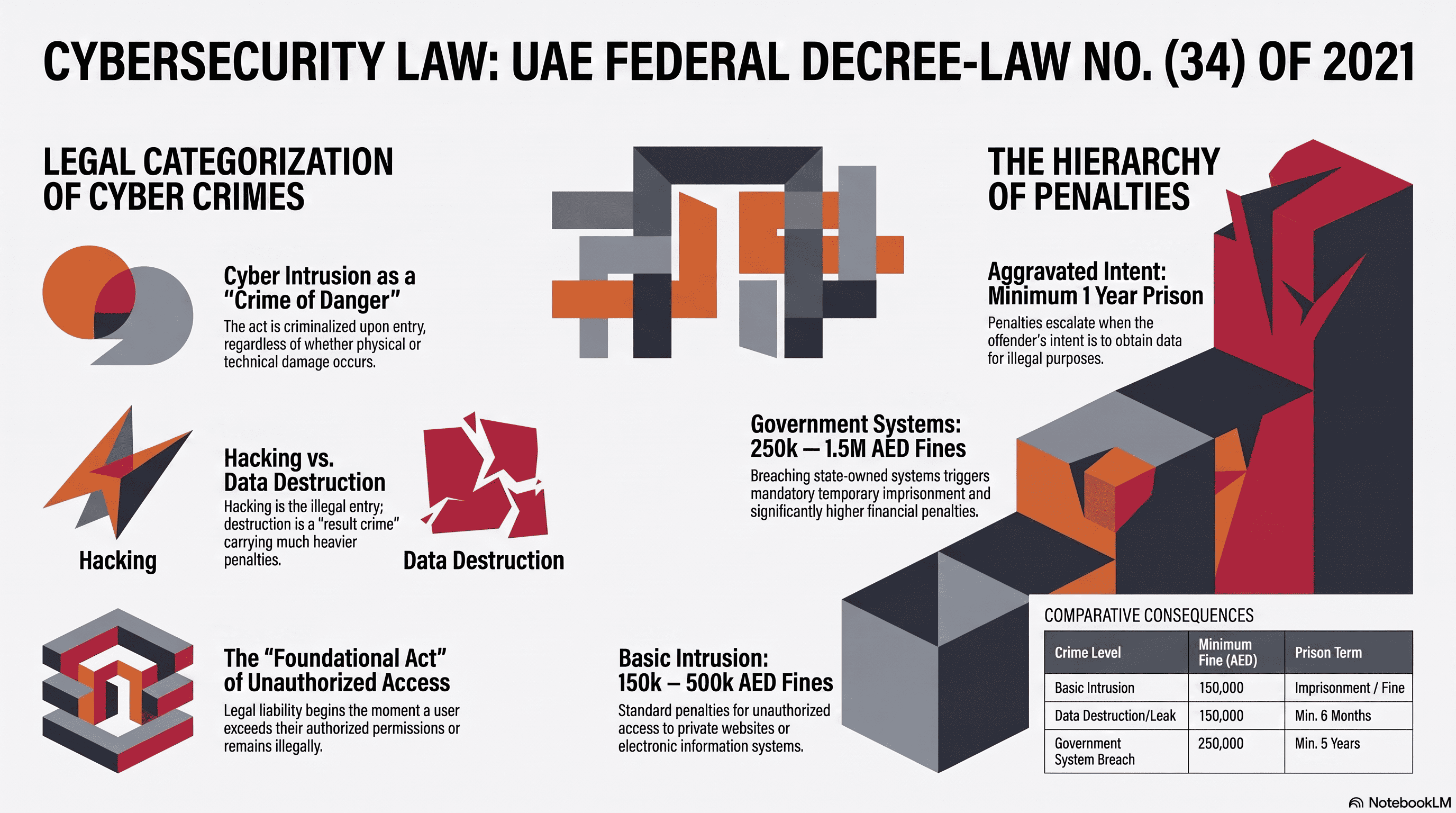
This study aims to demonstrate the role of cybersecurity in countering cyber intrusion crimes in light of the applicable UAE legislation, through analyzing the legal issues associated with the violation of personal and confidential data, whether through full or partial access without lawful authorization. The study adopted the descriptive, analytical, and inductive approach in order to examine the relevant legislative provisions and analyze the UAE legislator's position on criminalizing such acts, by reviewing Articles (2) and (3) of Federal Decree-Law No. (34) of 2021, which relate to intrusion and unlawful access offenses, as well as the aggravating provisions concerning data destruction and system disruption, thereby reaching objective findings that enhance the academic understanding of the nature of these crimes and their security and legal implications. The study found that cyber data intrusion crimes are characterized by rapid execution and the possibility of being committed remotely, which means that their material element is often limited to a simple technical act, without requiring technical complexity or the physical presence of the offender at the scene of the crime. This creates exceptional challenges for criminal detection and prosecution mechanisms. In light of these findings, the study recommends the adoption of a separate legal provision within the Federal Law on Combating Rumors and Cybercrimes that criminalizes the use of cyber intrusion systems as a means of committing the offense, along with the introduction of a specific penalty in the Penal Code concerning the intrusion of governmental information systems, thereby strengthening the legal and security protection of the national cyberspace and keeping pace with the rapid technological developments in the field of digital crimes.
الملخص
تهدف هذه الدراسة إلى بيان دور الحماية السيبرانية في التصدي لجرائم الاختراق الإلكتروني في ضوء التشريع الإماراتي النافذ، وذلك من خلال تحليل الإشكاليات القانونية المرتبطة بالاعتداء على البيانات الشخصية والسرية، سواء تم ذلك بالاطلاع الكلي عليها أو الجزئي عليها دون سند قانوني. وقد اعتمدت الدراسة على المنهج الوصفي التحليلي الاستقرائي، بهدف استقراء نصوص التشريعات ذات الصلة، وتحليل موقف المشرع الإماراتي من تجريم هذه الأفعال، من خلال استقراء نصوص المادتين (2) و(3) من المرسوم بقانون اتحادي رقم (34) لسنة 2021، المتعلقتين بجريمتي الاختراق والدخول غير المشروع، ونصوص الفقرات المشددة الخاصة بإتلاف البيانات وتعطيل الأنظمة، وصولًا إلى نتائج موضوعية تعزز الفهم العلمي لطبيعة هذه الجرائم وتداعياتها الأمنية والقانونية. وتوصلت الدراسة إلى أن جرائم اختراق البيانات السيبرانية تتسم بسرعة التنفيذ وإمكانية ارتكابها عن بُعد، بما يجعل الركن المادي فيها يقتصر غالبًا على إجراء تقني بسيط، دون اشتراط تعقيد تقني أو حضور مادي للجاني في مسرح الجريمة، الأمر الذي يفرض تحديات استثنائية على آليات الضبط والملاحقة الجنائية. وفي ضوء هذه النتائج، أوصت الدراسة بضرورة تخصيص مادة قانونية مستقلة ضمن قانون مكافحة الشائعات والجرائم الإلكترونية الاتحادي، تُجرّم استخدام أنظمة الاختراق السيبراني كأداة لارتكاب الجريمة، مع استحداث عقوبة خاصة في قانون الجرائم والعقوبات تتعلق باختراق الأنظمة المعلوماتية الحكومية، بما يعزز مستويات الحماية القانونية والأمنية للفضاء السيبراني الوطني، ويواكب التطور التقني المتسارع في مجال الجرائم الرقمية.
Downloads
References
Al-’Awayshah, A. F. Sh. (2022). Al-mas’uliyyah al-madaniyyah li-muzawwidi al-khidmah fi al-amn al-sibrani [The civil liability of service providers in cybersecurity]. Majallat Jami’at ’Amman al-’Arabiyyah li-al-Buhuth – Silsilat al-Buhuth al-Qanuniyyah, 4(2), 112–145.
Al-Azraq, N. N. (2021). Muhaddidat al-mas’uliyyah al-jina’iyyah li-jara’im al-ikhtiraq wa al-i’tirad wa al-intihal wa aliyyat al-dabt wa al-rad’ fi al-tashri’at al-’Arabiyyah fi al-’asr al-raqmi: Dirasah tahliliyyah muqaranah [Determinants of criminal liability for hacking, interception, and impersonation crimes and mechanisms of control and deterrence in Arab legislation in the digital age: A comparative analytical study]. Majallat al-Buhuth al-I’lamiyyah, 56(3), 1041–1080. https://doi.org/10.21608/jsb.2021.150183
Al-Duwaykat, F. M. D. (2024). Nitaq al-himayah al-jaza’iyyah li-al-bayanat al-shakhsiyyah al-iliktruniyyah fi al-qanun al-Urduni [The scope of criminal protection for electronic personal data in Jordanian law] [Unpublished master’s thesis]. Al-Isra University.
Al-Marri, R. M. (2023). Al-amn al-sibrani wa himayat al-anzimah al-iliktruniyyah: Dirasah tahliliyyah ta’siliyyah [Cybersecurity and the protection of electronic systems: An analytical foundational study]. Majallat al-Dirasat al-Qanuniyyah wa al-Iqtisadiyyah, 9(1), 959–1008.
Al-Nasir, M. (2023). Ashkal intihak al-fada’ al-sibrani wa wasa’iluha wa atharuha [Forms of cyberspace violation, its means, and its effects]. Majallat al-Nadwah li-al-Dirasat al-Qanuniyyah, 40, 86-120.
Al-Qatatshah, B. F. H. (2024). Al-himayah al-jina’iyyah li-khususiyyat al-bayanat al-shakhsiyyah al-raqmiyyah: Dirasah muqaranah [Criminal protection of the privacy of digital personal data: A comparative study] [Unpublished doctoral dissertation].
Al-Sayyid, Kh. S. (2022). Al-amn al-qawmi al-iliktruni wa jara’im al-ma’lumat [Electronic national security and information crimes]. Dar al-Nahdah al-’Arabiyyah.
Al-Shamsi, R. Gh. (2022). Himayat al-khususiyyah al-raqmiyyah fi zill tatbiqat al-dhaka’ al-istina’i: Dirasah tahliliyyah muqaranah [Protecting digital privacy in light of artificial intelligence applications: A comparative analytical study] [Unpublished master’s thesis]. United Arab Emirates University.
Cabinet. (2020). Decision No. (55) of 2020 on the Establishment of the Cyber Security Council. Official Gazette, Issue 678.
Cyber Security Council. (2023). Cyber Security Council. United Arab Emirates.
Department of Defense, U.S. (1985). Trusted Computer System Evaluation Criteria (TCSEC). DoD 5200.28-STD.
International Telecommunication Union. (2020). Global cybersecurity index 2020. ITU.
Jaydul, M., & ’Abbas, H. (2026). Himayat al-khususiyyah wa al-amn al-raqmi fi al-qanun al-jina’i [Protecting privacy and digital security in criminal law]. Al-Majallah al-’Arabiyyah li-al-’Ulum al-Qanuniyyah, 7(1), 27–33.
Khalifah, A. F. (2015). Al-jara’im al-massah bi-amn al-dawlah [Crimes affecting state security]. Dar al-Wafa’.
Lynn, A. (2011). The earliest computer security policies. IEEE Security & Privacy, 9(6), 72–75.
McAfee Associates. (1988). VirusScan user manual. McAfee Associates, Inc.
Mitnick, K., & Simon, W. (2011). In the realm of fear: The man who tricked the world’s most wanted hacker. Wiley.
Official Gazette. (2021). Federal Decree-Law No. (34) of 2021 on Combating Rumors and Cybercrimes. Government of the United Arab Emirates.
Sladek, S. (1989). The 414s and the MILNET hack. 2600: The Hacker Quarterly, 6(2), 40-42.
Telecommunications and Digital Government Regulatory Authority. (2019). National cybersecurity strategy. Government of the United Arab Emirates.
Tomlinson, R. (1984). The first network email. http://openmap.usc.edu/silk/1stEmail.html
UAE Government Official Portal. (2024). Cyber safety and digital security. Government of the United Arab Emirates.
Downloads
Published
How to Cite
Issue
Section
License
Copyright (c) 2026 Mohammad Ahmad Saeed Alfalasi, Syahirah Abdul Shukor, Mahmoud Mohammad Ali Mahmoud Edris

This work is licensed under a Creative Commons Attribution-NonCommercial 4.0 International License.