الطبيعة القانونية ومنظور الشريعة الإسلامية لقرارات التحكيم التعاقدي: دراسة تحليلية مقارنة
The legal nature and Shariah perspective on contractual arbitration decisions:A comparative analytical study
DOI:
https://doi.org/10.55265/lpsjournal.v6i1.159Keywords:
arbitral award, legal nature, judicial theory, res judicataAbstract
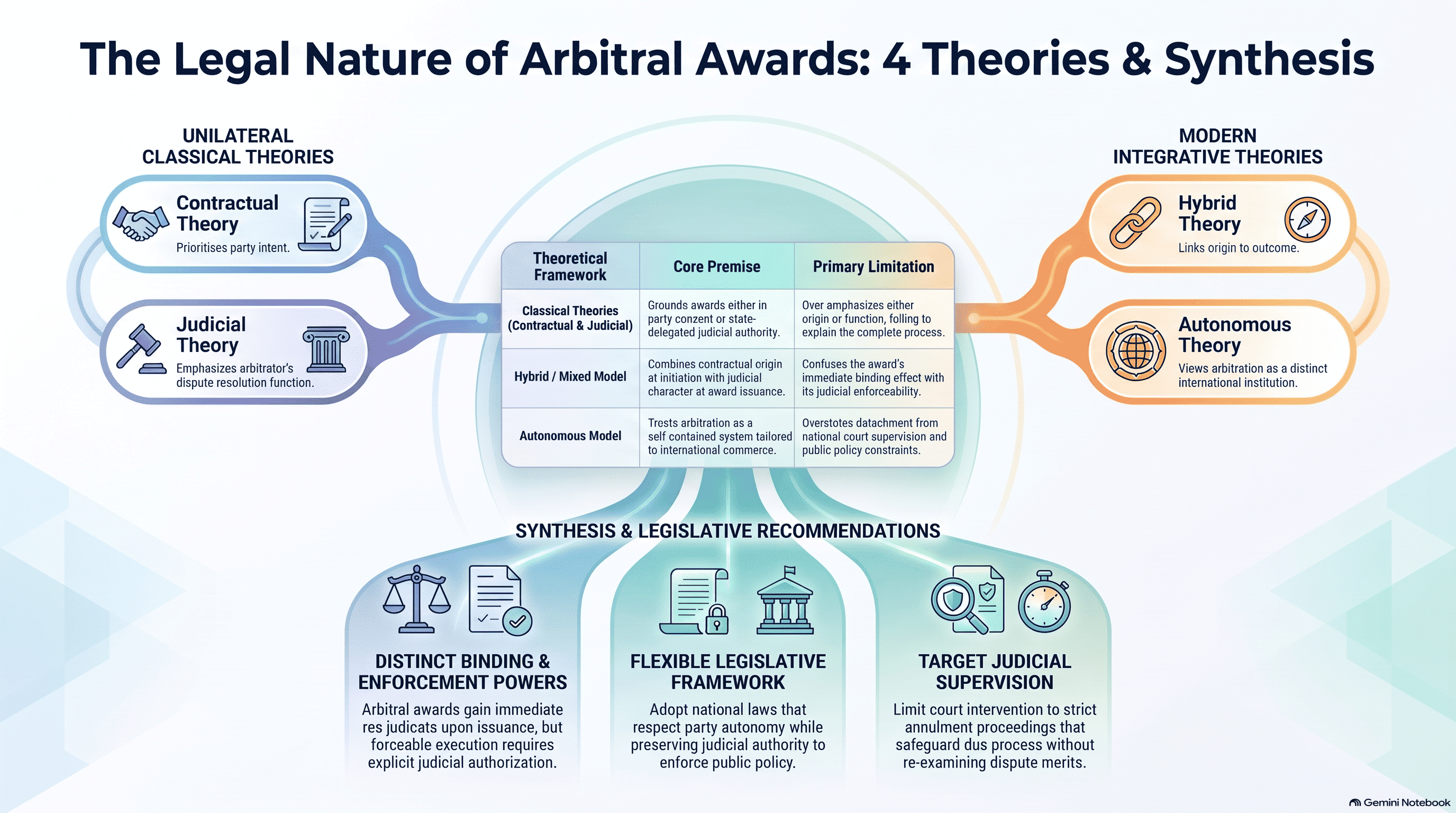
This study examines the jurisprudential and legal characterization of arbitral awards, focusing on their position between consensual contractual arrangements and the exercise of judicial authority. The research addresses the lack of definitive scholarly and judicial consensus on the nature of arbitral awards and the source of their binding force, which creates practical difficulties in determining the scope of national judicial supervision, enforcement procedures, and annulment proceedings. Adopting a descriptive-analytical approach, the study critically evaluates four principal theories. The contractual theory grounds the award in party autonomy and views arbitrators as agents implementing an agreement, but inadequately explains their independent adjudicative function. The judicial theory emphasizes the arbitrator’s dispute-resolution role and the award’s res judicata effect, although it faces criticism concerning the relative nature of that effect and its contractual foundations. The mixed or hybrid theory combines arbitration’s contractual origin with its judicial outcome, yet struggles to establish a decisive characterization or clearly distinguish binding effect from enforceability. The autonomous theory recognizes arbitration as an independent institution suited to international commercial needs, but risks overstating its separation from state supervision and enforcement mechanisms. The study concludes that an adequate characterization must accommodate both the consensual foundations and adjudicative consequences of arbitration while recognizing the continuing role of national courts. It recommends adopting a flexible legislative framework that balances contractual origin with judicial effect and clearly distinguishes the award’s immediate res judicata effect from its enforcement power, which remains subject to judicial authorization. It further recommends precise regulation of annulment proceedings to protect public policy and due process while preserving arbitral flexibility. These recommendations seek to reduce conceptual uncertainty, promote consistency in judicial treatment, and clarify the relationship between arbitral decision-making and state authority, thereby supporting an effective and coherent arbitration framework that respects party autonomy and procedural safeguards throughout the arbitral process.
الملخص
تتناول هذه الدراسة إشكالية التكييف الفقهي والقانوني لحكم التحكيم، من خلال بحث موقعه بين التصرف التعاقدي القائم على إرادة الأطراف والوظيفة القضائية الهادفة إلى الفصل في المنازعات. وتتمثل مشكلة البحث في غياب توافق فقهي وقضائي حاسم بشأن طبيعة الحكم ومصدر قوته الإلزامية، وما يترتب على ذلك من صعوبات عملية تتصل بنطاق رقابة القضاء الوطني، وإجراءات التنفيذ، ودعاوى البطلان. وتعتمد الدراسة المنهج الوصفي التحليلي لاستعراض النظريات الأربع الرئيسية المفسرة لطبيعة حكم التحكيم، ومقارنة مرتكزاتها والانتقادات الموجهة إليها. فالنظرية التعاقدية تربط الحكم بسلطان الإرادة، وتعد المحكمين وكلاء ينفذون اتفاق الأطراف، لكنها تعجز عن تفسير استقلال وظيفتهم في حسم الخصومات. أما النظرية القضائية فتركز على الطبيعة الفصلية لعمل المحكم وحجية الحكم، وتواجه انتقادات تتعلق بنسبية هذه الحجية وارتباط أساسها باتفاق التحكيم. وتسعى النظرية المختلطة إلى الجمع بين المنشأ العقدي للتحكيم وأثره القضائي، غير أنها لا تقدم تكييفًا حاسمًا، كما يؤخذ عليها عدم التمييز الدقيق بين الحجية الفورية والقوة التنفيذية. وتمنح النظرية المستقلة التحكيم طبيعة ذاتية تستجيب لمتطلبات التجارة الدولية ومرونتها، لكنها تبالغ في تصوير استقلاله عن سلطة الدولة ورقابتها وآلياتها التنفيذية. وتخلص الدراسة إلى أن التكييف الملائم ينبغي أن يستوعب الأساس الإرادي للتحكيم ونتائجه القضائية، مع الإقرار بالدور المستمر للقضاء الوطني في ضمان سلامة إجراءاته وفاعلية أحكامه. وتوصي بتبني إطار تشريعي مرن يوازن بين الأصل العقدي والأثر القضائي، ويحدد بوضوح الفارق بين حجية حكم التحكيم الموضوعية التي تثبت فور صدوره، وقوته التنفيذية التي تتوقف على صدور أمر قضائي بالتنفيذ. كما تدعو إلى ضبط أحكام دعاوى البطلان وتحديد نطاق الرقابة القضائية بما يكفل حماية النظام العام وحقوق الدفاع وضمانات المحاكمة العادلة، دون إهدار خصوصية التحكيم أو الحد من مرونته. وتهدف هذه التوصيات إلى تقليل الغموض المفاهيمي، وتعزيز اتساق المعالجة القضائية، وتوضيح العلاقة بين العدالة التحكيمية وسلطة الدولة، بما يدعم بناء منظومة تحكيمية متوازنة تجمع بين احترام إرادة الأطراف وصون الضمانات الإجرائية وتحقيق الاستقرار القانوني في تسوية المنازعات، وتوفير أساس أوضح لتنظيم آثار الأحكام التحكيمية والتعامل معها أمام الجهات القضائية الوطنية المختصة.
Downloads
References
’Abd al-Sadiq, A. M. (2014). Al-marji’ al-’amm fi al-tahkim al-Misri wa al-’Arabi wa al-dawli [The general reference in Egyptian, Arab, and international arbitration] (7th ed.). Dar al-Qanun li-al-Isdarat al-Qanuniyyah.
Abu Ahmad, A. M. M. M. (2008). Al-tahkim fi munaza’at al-’uqud al-idariyyah al-dawliyyah fi daw’ al-qawanin al-wad’iyyah wa al-mu’ahadat al-dawliyyah wa ahkam mahakim al-tahkim: Dirasah muqaranah [Arbitration in international administrative contract disputes in light of positive laws, international treaties, and arbitral tribunal rulings: A comparative study]. Dar al-Jami’ah al-Jadidah.
’Afifi, M. (2012). Nizam al-ta’n ’ala hukm al-tahkim [The system of challenging the arbitral award]. Dar al-Jami’ah al-Jadidah.
Al-Budayri, M., & Al-Budayri, R. (2024). Al-wajiz fi sharh qanun al-tahkim [The concise guide to explaining the arbitration law] (2nd ed.). Dar al-Afaq.
Al-Tarawneh, M. A. (2026). Hukm al-tahkim [The arbitral award]. Dar al-Thaqafah li-al-Nashr wa al-Tawzi’.
Budlal, F. (2023). Al-tahkim fi al-’uqud al-idariyyah [Arbitration in administrative contracts]. Dar al-Jami’ah al-Jadidah.
Dawud, A. F. S. (2018). Al-tabi’ah al-qanuniyyah li-hukm al-tahkim wa atharuh wa turuq al-ta’n bih: Dirasah muqaranah [The legal nature of the arbitral award, its effects, and the methods of challenging it: A comparative study]. Dar al-Shamil li-al-Nashr wa al-Tawzi’.
Isma’il, N. U. (2011). Al-tahkim fi al-mawadd al-madaniyyah wa al-tijariyyah al-wataniyyah wa al-dawliyyah: Ittifaq al-tahkim, khusumat al-tahkim, hukm al-muhakkim wafqan li-ahdath al-ta’dilat al-tashri’iyyah wa al-qada’iyyah [Arbitration in national and international civil and commercial matters: The arbitration agreement, the arbitral proceedings, and the arbitrator’s award in accordance with the latest legislative and judicial amendments]. Dar al-Jami’ah al-Jadidah.
Published
Issue
Section
License
Copyright (c) 2026 Samih Ali Nasser Ambar, Mahmoud Mohamed Ali Mahmoud Edris

This work is licensed under a Creative Commons Attribution-NonCommercial 4.0 International License.